


Subscribe to Our Updates
Join our community and be the first to receive exclusive insights
You are subscribed now!


.svg)

Products
Solutions
Resources
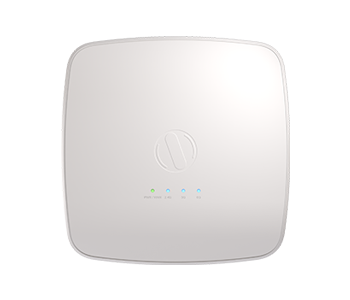
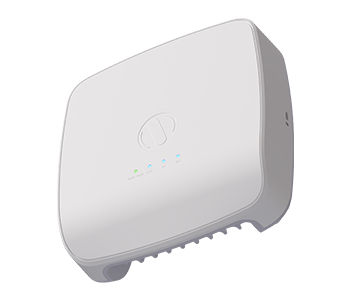
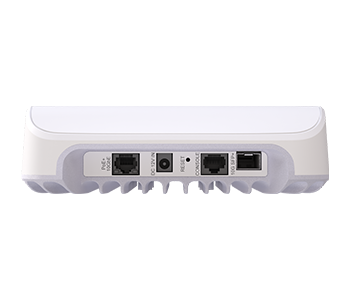
The ion6bi access point delivers high-capacity, reliable wireless connectivity for medium-to-high-density indoor environments. This WiFi access point delivers exceptional performance in classrooms, conference venues, indoor arenas and mass transit facilities.
Advanced WiFi 7 features like Multi-Link Operation(MLO), preamble puncturing, multi-RU allocation ensure efficient radio resource utilization. 6GHz support enables the use of cleaner and wider channels for consistent performance. Enterprise-grade security with the latest versions of WPA3 and OWE provide a higher degree of trust. These features make this indoor wireless access point a future-ready solution for modern connectivity needs.
IEEE 802.11be (backward compatible with 802.11abgn/ac/ax)
Tri-radio (2.4 GHz / 5 GHz / 6 GHz) with 6 spatial streams
2x2:2 MIMO per Radio
9.2 Gbps Peak Data Rate
Peak Transmit Power: 23 dBm for 2.4 and 5 GHz, 22 dBm for 6 GHz
Integrated Omnidirectional Antenna
4 dBi gain for 2.4 GHz
5 dBi gain for 5 GHz
5 dBi gain for 6 GHz
10 GbE with PoE IN
10G SFP+
Support for Multi-Link Operation (MLO)
Multi-link Single Radio (MLSR)
Enhanced Multi-link Single Radio (eMLSR)
Multi-link Multi Radio, Simultaneous Tx and Rx (MLMR-STR)
Preamble Puncturing & Multiple Resource Unit
Auto Channel and Power Management
Fast Roaming (802.11k/v/r)
Hotspot 2.0
Passpoint 3.0
Advanced Radio Resource Management
EasyMesh Support
Link Aggregation (LACP)
SNMP v2c/v3
Topology Discovery (LLDP)
WPA3, OWE, PMF
802.1X Authentication with NAC Integration
Captive Portal and AAA Server Integration
Client Isolation
On-Prem/Cloud Controller
TIP OpenWiFi Controller
With tri-band WiFi 7 delivering up to 9.2 Gbps, the AP ensures smooth connectivity for high-density indoor setups such as offices, classrooms, and retail floors, handling video calls, streaming, and IoT traffic without lag.
The MLO feature allows data transmission over multiple links simultaneously, reducing latency and improving performance for bandwidth-intensive or real-time applications like XR and cloud collaboration.
Using preamble puncturing and multi-RU allocation, the AP dynamically adapts channel usage and bandwidth per user, maintaining stable connections and peak speeds even in noisy RF conditions.
Education
High-capacity connectivity for presentations, 4K/8K streaming, interactive sessions, and real-time audience engagement.

Retail
Reliable, high-speed access for instant digital payments and immersive shopping experiences, even in peak hours.

Venues
Dense-environment performance enabling smooth streaming, AR/VR-driven experiences, and real-time crowd interactions.

Hospitality
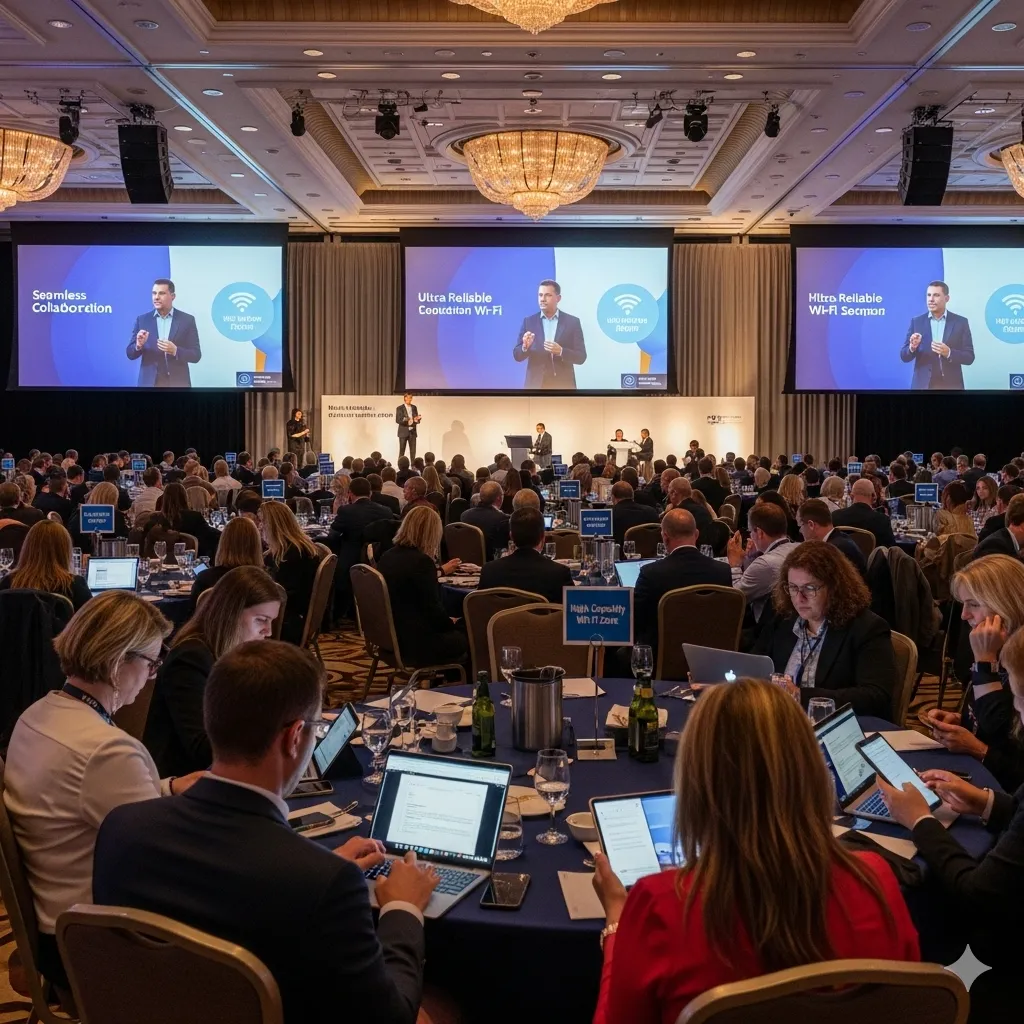
Seamless connectivity for conferences and events, supporting ultra-reliable video, collaboration tools, and enhanced guest experiences.
In an Age of Ever-growing Connectivity and a Relentless Thirst for Faster Data Speeds...
Discover the Untethered Possibilities of Gaming and Content Creation with Low...
Explore HFCL’s Open-Source Wi-Fi 7 Solutions Driving the Next Generation of...
Find answers to key questions about our Wi-Fi Access Points to
help you choose the right solution for your network
WiFi 7 is designed for next-generation workloads like AI, cloud-based producitivity and collaboration apps, XR devices etc. WiFi 7 delivers deterministic low latency, higher throughput, and improved multi-user efficiency, making it ideal to support high user density, high capacity and high-bandwidth scenarios. Investing now ensures future-proof infrastructure that can handle tomorrow’s digital demands.
WiFi 7 is not just about higher data rate. It also includes features that improve the system's ability to
a) handle different application workloads (Multi-RU allocation);
b) avoid narrow-band interference (Preamble puncturing;
c) utilize all available radios to reduce latency and increase per-user bandwidth (Multi-link Operation). In campus scenarios, these features are essential for applications such as streaming lectures, online learning tools and collaborative research.
WiFi 7 supports a higher modulation rate (4096-QAM) compared to WiFi 6, resulting in a higher peak data rate. Multi-link operation (MLO) enables bandwidth aggregation across radio-links, thus increasing the per-user throughput. In addition, MLO reduces the channel access delay by using any available link, thus decreasing the overall data latency.
Spectral efficiency is defined as the number of bits transmitted per unit time per Hertz. As Wi-Fi 7 supports 4k-QAM, the transmission rate is higher for same bandwidth, compared to Wi-Fi 6. Hence, the spectral efficiency is more. As more bits are transmitted per unit time, the same amount of data can be transmitted in less time than Wi-Fi 6. In addition, with MLO, any available radio link can be used for data transmission. As a result, the data latency is reduced.