


There is a moment every hotelier is familiar with: a guest calling the front desk, not to complain about the room, but to report that the Wi-Fi is not working. Today, guests carry multiple connected devices and expect seamless Wi-Fi connectivity everywhere. When Guest Wi-Fi fails, it doesn’t just frustrate them - it impacts reviews, repeat bookings, and revenue.
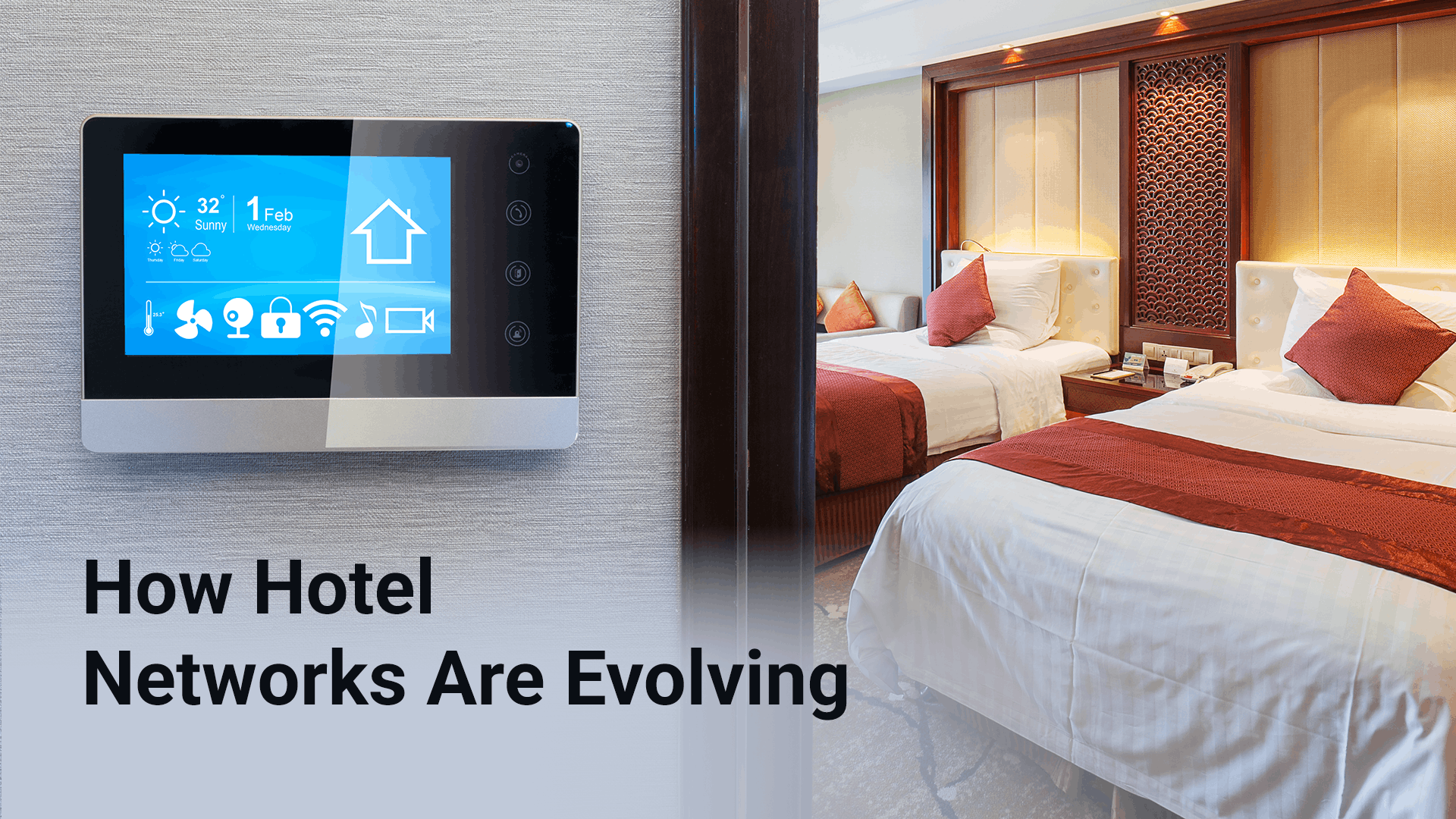
However, today, hotel networking is no longer just about guest Wi-Fi. Modern hotels rely on connectivity to power smart room controls, energy management systems, digital check-ins, keyless entry to other housekeeping workflows and services. As IoT adoption grows, the Wi-Fi network has become one of the most critical infrastructures within a hotel.
Recognizing this shift changes how hotels approach their networking solutions. The focus is no longer just on providing high-speed Wi-Fi connectivity; it is about building a reliable network foundation that supports every digital experience across the property.
Why Hotel Wi-Fi Solutions Are No Longer Just About Guest Connectivity?
For years, hotel wi-fi solutions were judged on one metric: speed. Could guests stream video? Could business travellers join calls without interruption? These benchmarks were once enough to define the performance of Wi-Fi.
That is no longer enough.
The IoT era in hospitality introduced a new layer of connected devices that altered network demands.
A mid-size hotel or a large hotel chain today runs a large number of connected devices simultaneously. Guest smartphones and laptops share the network with IP cameras, digital door locks, sensors, tablets, and POS systems. A network built only for guest usage simply cannot support the scale of a fully automated hospitality environment.
This creates common problems. Devices disconnect. Automation workflows fail mid-process. Guest wi-fi performance drops when operational IoT traffic competes for bandwidth on a flat, undivided network. The issue isn’t that all IoT devices use too much bandwidth. In fact, many IoT devices, such as sensors, locks, thermostats, etc., transmit small data packets and are inherently low-bandwidth.
The real issue is that everything runs on the same network without proper segmentation. When high-bandwidth applications like video surveillance and real-time systems compete alongside thousands of low-bandwidth IoT devices, performance becomes unpredictable. This leads to congestion, latency, and inconsistent network performance.
To fix this, hotels need to rethink their Hospitality Networking Solutions - not just upgrade parts of the network.
What IoT-Ready Hospitality Networking Solutions Look Like?
The architecture of a modern hotel network is designed differently from a conventional hotel network. Instead of a single flat architecture where all traffic competes for bandwidth, an IoT-ready hotel network is layered and segmented.
This is achieved through network segmentation techniques like VLANs and policy-based access control, which separate guest traffic, operational systems, and IoT devices. This ensures each network segment operates independently, allowing all systems to run reliably at scale without interference.
Wi-Fi 6 Access Points: Powering the Smart Guest Room
Inside guest rooms, the access point is the foundation of the connected experience. Wi-Fi 6 access points designed for hospitality environments ensure reliable, high-performance connectivity for both guest devices and smart room systems.
Wall plate access points, further improve coverage by eliminating signal loss from walls and corridors ensuring consistent in-room connectivity.
Network Switches: The Backbone of Hotel Operations
At the core of the hotel network, network switches connect and power critical systems across the hotel. These switches deliver both connectivity and power to IP cameras, access control systems, sensors, digital signage, and more.
This layer is critical. If it fails, hotel operations are directly affected from housekeeping workflows to energy & security systems. A strong switching layer ensures everything runs smoothly.
Cloud-Managed Hotel Network: The Intelligence Layer Behind Hotel Automation
Cloud-managed networks are changing how hotels manage their IT systems. Rather than static, manually administered systems, cloud-managed networks give hotels operations teams AI-driven visibility and control across every device, access point, and switch on the property from a single dashboard.
With AI-driven insights, issues can be detected early. Predictive alerts help fix problems before they affect guests. Features like Zero Touch Provisioning automates the configuration of new access points and network switches, enabling set up new devices or even new properties without needing specialists IT teams on-site. For hotel groups managing multiple properties, this is not just operational convenience; it is a structural reduction in IT costs that scales with the size of the portfolio.
The data generated by a cloud-managed hotel network also opens a layer of intelligence that that traditional hotel networks simply cannot offer. Real-time analytics on device performance, guest wi-fi usage patterns, bandwidth consumption by network segment, and predictive failure indicators give IT teams the visibility to make make smarter, more proactive decisions rather than reactive ones.
Guest Wi-Fi Management for Hotels: Where the Guest Experience Begins
Guest Wi-Fi still plays a central role in the overall Guest Experience. One key expectation today is seamless connectivity. Guests should be able to move from their room to the lobby or restaurant without losing connection or speed drops. Achieving this requires coordinated access point deployment with proper channel planning, band steering & fast roaming protocols built into the hotel networking solution from the outset.
Guest onboarding is equally important. Outdated captive portals and complex password flows feel out of place in a premium hospitality environment. Modern hotel wifi solutions enable instant, branded guest onboarding through login or OTP, turning the moment a guest connects to the network into a seamless part of the arrival experience rather than a friction point.
Bringing it all together- HFCL Solutions for IoT-Ready Hotel Networks
This is where integrated Hospitality Networking Solutions make a difference. Instead of managing multiple vendors and disconnected systems, HFCL delivers a unified hospitality networking ecosystem in which every layer from Wi-Fi 6 access points (indoor, outdoor, and in-room wallplate APs) to PoE+ managed network switches and the IO Canvas cloud platform, everything is built as one cohesive ecosystem.
At access layer, HFCL’s WiFi 6 indoor and outdoor access points, including the wall plate AP for hotel guest rooms, ensure strong, reliable coverage across the property. They are designed to handle high device density while eliminating dead zones, especially inside guest rooms. For the operational IoT backbone, L2/L3 PoE+ managed network switches power everything from IP cameras and smart room controllers to access control systems and energy management sensors through a single switching infrastructure.
IO Canvas, HFCL’s AI-powered cloud network management platform gives hotels' IT teams centralised visibility and control across every access point, switch, and connected device across the entire network from one dashboard. With features like predictive alerts, real-time analytics, and zero-touch provisioning, teams can identify and resolve issues before they impact operations. For guest onboarding, IO Pass delivers a branded, frictionless captive portal experience.
The result is a hospitality networking solution that does not simply support IoT devices. It actively orchestrates them. Smart rooms respond faster. Energy systems adjusts in real time and hotel IT or operations teams can focus less on troubleshooting and more on delivering better experiences.






.svg)